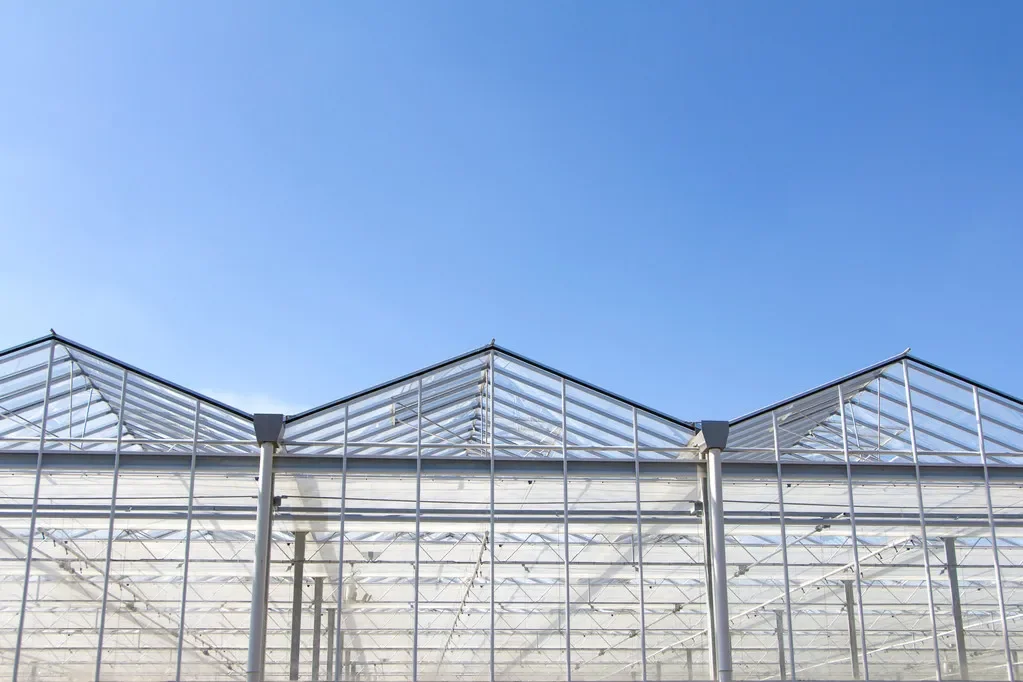
Direct Air Capture (DAC) gives Dutch greenhouse growers a on-site fossil free CO₂ supply at a time when traditional sources are shrinking. With the first SDE++ subsidies for DAC awarded in 2026, it is now a commercially viable option, not just a future technology.
The sector is currently experiencing two significant shifts reshaping the supply of CO₂. Firstly, a climate agreement between growers and the Dutch government mandates the phasing out of fossil fuel-based heating. Although alternatives like geothermal and residual heat can provide the necessary thermal energy for greenhouses, they do not produce CO₂ as a by-product.
Secondly, the industrial CO₂ that is delivered through the main pipeline serving Dutch greenhouses (OCAP, operated by Linde Gas) is increasingly being directed to permanent carbon capture and storage (CCS). This shift has led to a reduction of approximately 60% in the volumes available for the horticulture sector (FD, 2024).
The combined impact of these changes is substantial.
Researchers from Wageningen University & Research, along with Glastuinbouw Nederland, project a structural CO₂ shortfall of 0.8 to 1.4 million tons per year by 2031. This is concerning because CO₂ enrichment can increase crop yields by up to 30%. Without a fossil-free alternative, both productivity and the Netherlands’ €11.3 billion horticulture export position may be jeopardized.
Direct Air Capture (DAC) provides a solution that enables the CO₂ transition directly. By capturing CO₂ from ambient air on-site, DAC delivers a circular, fossil-free and locally produced carbon source, independent of volatile fossil markets and industrial by-product streams.
DAC’s strategic innovation value is now explicitly recognised in Dutch policy. The Agrifood Innovation Agenda (Ministry of Agriculture, Fisheries, Food Security and Nature - LVVN, 18 June 2026) identifies the greenhouse sector as one of four priority innovation domains for the Dutch agrifood cluster, and names Direct Air Capture as a specific focus area for securing a circular, fossil-free CO₂ supply that keeps Dutch horticulture productive, competitive and climate-aligned. In short, DAC is now recognised as a structural pillar of a competitive and future-proof greenhouse sector.
Policy recognition sets the direction; a workable financial mechanism makes it real. The decisive mechanism behind the first wave of DAC deployments is the Contract-for-Difference (CfD) subsidy structure embedded in the SDE++. A CfD compensates the “unprofitable top”, the gap between the production cost of circular DAC CO₂ and the prevailing fossil CO₂ benchmark, over a contract period of 12–15 years.
The CfD design is powerful because it de-risks commercial deployments without over-subsidising them. The subsidy pays only what is needed to close the gap, and automatically shrinks as fossil CO₂ becomes scarcer and more expensive, and as DAC technology continues to scale and lower its cost base. For growers, this means long-term supply security and predictable Levelised Cost of CO₂.
Today’s commercially available DAC technology already delivers CO₂ at a competitive cost for the buyer. Dutch growers currently pay on average €150 per tonne of captured CO₂, a figure that already includes electricity consumption, subsidy, Skytree’s margin, based on a 20-year depreciation of the equipment. Being open about these variables matters: they all feed into any realistic cost-per-tonne calculation, and they show that DAC is a credible economic option today.
The strength of this design is no longer hypothetical. In 2026, a group of Dutch greenhouse projects secured the first-ever SDE++ awards for Direct Air Capture, together representing a combined capture capacity of around 23,000 tonnes of atmospheric CO₂ per year and mobilising approximately €80 million in subsidies. These awards mark a decisive step in Dutch horticulture’s transition to a resilient, fossil-free CO₂ supply, and move DAC from policy ambition to commercial reality. The first commercial Skytree Stratus system is now being deployed at Lingezegen Energy and Skytree, the first of many.
Moving from concept to a funded deployment requires rigorous financial modelling and tight alignment between equipment, energy availability and CfD application requirements.
Skytree supports growers across the full path, from feasibility studies to incentive applications and project delivery. Our team brings over four years of experience at the intersection of DAC technology and Dutch horticulture, has led subsidy applications totalling more than €100 million for greenhouse projects, and works with growers across more than 150 hectares of greenhouse area.
Skytree continues to support Dutch greenhouses for these programs and will work together with a new group to apply for the next SDE++ submission, prepare for the deployments related to those programs and deliver the projects that provide Dutch greenhouses a secure and circular CO₂ supply at predictable price levels.

Author
Skytree's Strategic Project Development Manager
Amanda leads Public Affairs and Carbon Policy at Skytree, where she helps shape the future of decentralized Direct Air Capture (DAC) technology. At the intersection of policy, strategy, and innovation, she drives partnerships and project development to advance scalable carbon removal solutions across Europe and beyond.
Amanda combines a deep understanding of international business, technology, and philosophy, allowing her to address the complexities of the field with a strategic and forward-thinking approach, making her a compelling voice in shaping the CO₂ transition.
Before joining Skytree, Amanda worked in digital transformation consulting at a Big Four firm, where she focused on integrating new technologies into complex organizational landscapes. She is passionate about bridging innovation, policy, and purpose to accelerate meaningful progress in climate action.